Waterfront living in Westport can look like a dream at first glance, but the details behind the view matter just as much as the shoreline itself. If you are thinking about buying a riverfront, harbor-side, or ocean-adjacent home here, you need more than a quick tour and a price comparison. You need to understand flood risk, permitting, access, and property-specific costs before you make an offer. Let’s dive in.
Why Westport waterfront is unique
Westport is not a one-size-fits-all waterfront market. The town sits on Rhode Island Sound and the Westport River, and it recognizes Westport Point, Head of Westport, and Acoaxet/Westport Harbor as distinct areas. Since 22.27% of Westport’s area is water, buyers can encounter very different property types, from protected riverfront settings to more exposed coastal locations.
That variety is a big reason waterfront shopping here requires careful comparison. Two homes may both be described as waterfront, yet offer very different experiences based on elevation, shoreline condition, access, and exposure to weather. In Westport, the word waterfront is just the starting point.
Compare the type of waterfront
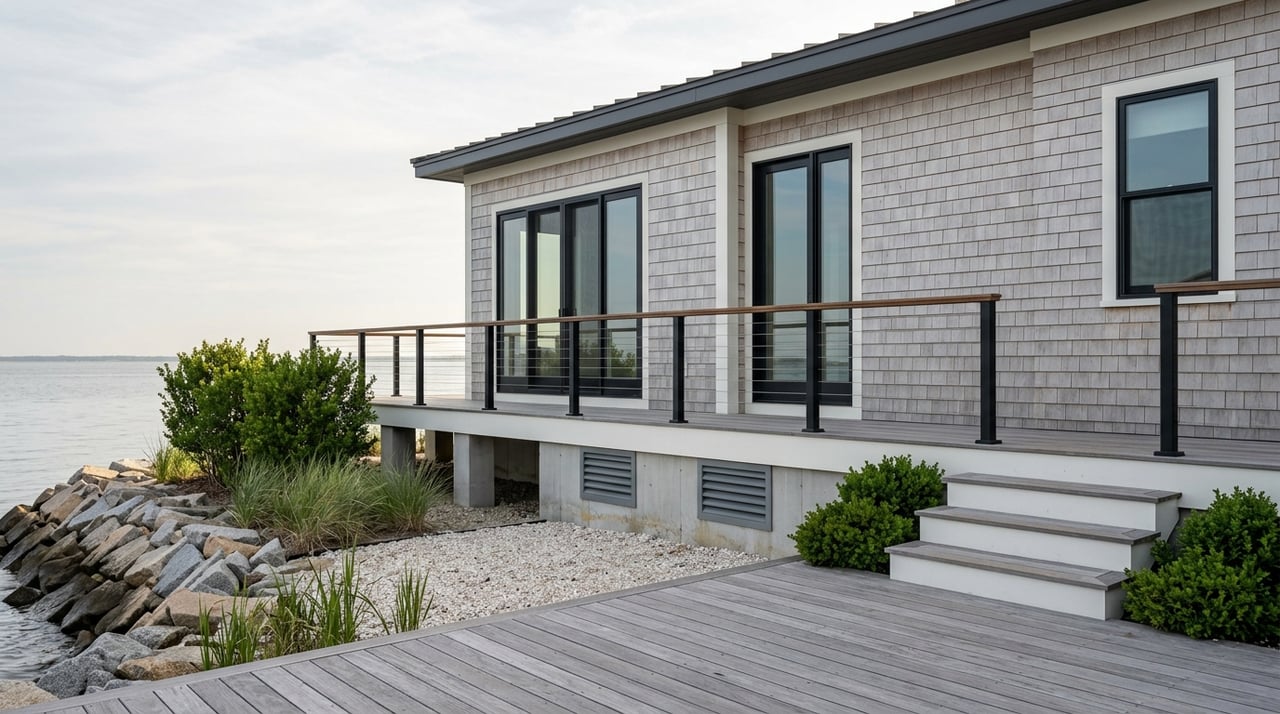
Not every waterfront home functions the same way day to day. A property on the river may offer different boating conditions, wave exposure, and shoreline maintenance needs than a home closer to the open coast. Harbor-front and ocean-adjacent homes can also differ in access, views, and storm vulnerability.
When you tour homes, look beyond the photos and ask how the site actually lives. Think about whether you want direct water access, a broader view, easier boating, or a more protected setting. Those differences can shape both your enjoyment of the home and your long-term costs.
Understand pricing beyond the headline number
Westport market data is useful, but it should be read as a general guide rather than a fixed rule for waterfront pricing. A Massachusetts Association of Realtors update showed a February 2026 single-family median sales price of $740,000, while Realtor.com listed a median listing price of $749,999 citywide and $750,000 on its Westport waterfront page. Since sold prices and list prices measure different things, and because waterfront inventory is limited, these figures are best treated as directional.
This matters because a small market can hide large differences between properties. One headline median does not tell you whether a home has better frontage, stronger elevation, wider views, easier access, or cleaner permit history than another. In Westport, true comparables matter more than broad averages.
What tends to influence value
Research on Massachusetts coastal towns found that value usually drops as distance from the coastline increases, with the strongest premium at the waterfront. Water views and wider beaches can also add value. In practical terms, Westport pricing is often shaped by the specific traits of the site, not just the address.
Key value drivers often include:
- Frontage quality
- Water view
- Elevation
- Beach or river access
- Shoreline condition
- Permit status
- Dock or mooring potential
Check flood risk early
Flood risk should be part of your thinking before you settle on an offer price. FEMA defines Special Flood Hazard Areas, or SFHAs, as areas expected to flood during the 1-percent-annual-chance event. These include zones A, AE, AO, V, and VE.
For coastal buyers, Zone VE deserves especially close attention. FEMA identifies VE as a coastal high-hazard zone where wave action and fast-moving water can cause extensive damage. Special floodplain management requirements apply in that zone, which can affect both ownership costs and future work on the property.
Why elevation matters
In Westport, first-floor height and site elevation can matter as much as distance to the shoreline. FEMA notes that flood insurance pricing can depend on coverage amount, flood zone, structure design and age, and elevation relative to the base flood elevation. A home that sits higher may present a very different insurance picture than one that looks similar from the street.
That is why buyers should confirm the flood zone and ask for any available Elevation Certificate as early as possible. It can help you understand the property more clearly before you commit. This is one of the most important steps in waterfront due diligence.
Price flood insurance into the deal
Flood insurance is separate from standard homeowners insurance, and it may be required for properties in an SFHA when covered financing is involved. That means you should not wait until late in the transaction to explore costs. If you do, the monthly payment picture may change after you already feel committed.
A smarter approach is to get a flood insurance quote before or during the offer stage. This gives you a more realistic sense of affordability and helps you compare homes on a true cost basis. On waterfront properties, the purchase price is only one part of the financial equation.
Think long term about coastal change
Storm risk is only part of the story. Massachusetts says coastal areas are highly vulnerable to accelerating sea level rise and storm surges, and NOAA notes that sea level rise contributes to flooding, shoreline erosion, and storm hazards in coastal areas. For a waterfront buyer, that means the conversation should include long-term resilience, not just today’s conditions.
When you evaluate a property, think about how the lot, shoreline, and structure may perform over time. Ask whether the home’s elevation, site design, and location support your long-range plans. A beautiful setting is still a better investment when it aligns with realistic risk planning.
Review conservation and permit history
In Massachusetts, work in a wetland resource area or within 100 feet of a wetland buffer zone usually requires contact with the local conservation commission before starting. The typical process may involve a Notice of Intent and an Order of Conditions. For coastal properties, some projects may also involve state and federal review, including work related to moorings, piers, floats, dredging, and shoreline stabilization.
In Westport, permit history can directly affect a closing timeline. The Conservation Commission warns that an open Order of Conditions should be closed with a Certificate of Compliance and properly filed at the New Bedford Registry of Deeds. If that has not happened, it can delay a real estate transaction.
Why this matters before you buy
A waterfront lot may include old approvals, unresolved conditions, or recorded restrictions that affect future improvements. If you plan to expand, rebuild, repair a shoreline feature, or change site elements, these records matter. They can influence both what you can do and how long it may take.
This is one area where careful document review can save time and stress. A home with a strong paper trail is often easier to evaluate than one with open questions around past work. On waterfront property, paperwork is part of the asset.
Confirm septic compliance
Septic diligence is especially important on waterfront lots. Westport’s local rules state that new soil absorption systems cannot be built within 100 feet of waters of the Commonwealth or wetlands. The town also says sewage or greywater cannot be discharged into wetlands or waters, and stricter local Board of Health standards control when they are tighter than Title 5.
If a conventional septic system cannot fit the lot, Massachusetts requires innovative or alternative systems to be approved before use. That can affect cost, design, and project timing. Buyers should confirm septic compliance and inspection history, especially when the lot is close to the water or wetland areas.
Ask about buried fuel tanks and storage
Older waterfront properties sometimes come with systems or site conditions that are easy to miss during a casual showing. Buried fuel tanks and underground storage deserve extra attention. Westport’s by-law requires added protection for tanks near the high water table or within 100 feet of a surface water body.
The town also prohibits new underground fuel and chemical storage systems within 100 feet of a private well and 2,000 feet of a public water supply. This is worth reviewing carefully because site history can shape future maintenance, environmental concerns, and resale questions. It is another example of why waterfront due diligence goes well beyond the structure itself.
Verify docks, floats, and moorings
For many buyers, boating access is a major reason to consider a Westport waterfront home. But a dock, slip, or mooring should never be treated as automatic just because it appears in marketing photos or local conversation. Westport’s waterway rules make this a separate diligence item.
The town limits new private moorings and may place applicants on a yearly waiting list. Moorings must be registered annually, and they cannot be moved, sold, or transferred without Harbor Master approval. The rules also prohibit moorings in marked navigable channels, limit rafting to two vessels, and require annual registration for boats over 10 feet docked at commercial or private facilities in Westport waters.
What buyers should confirm
Before you write an offer, ask for documentation on any dock, float, slip, or mooring tied to the property. You will want to confirm:
- Current registration status
- Written permissions or approvals
- Whether transfer is allowed
- Any waiting list issues
- Seasonal restrictions
- Any limits on location or use
Westport also treats its tidal waterways as a zero-discharge zone and maintains pump-out service. If boating is central to your lifestyle, these operational details matter almost as much as the waterfront view.
Review title, easements, and access rights
Waterfront ownership can involve more than simply owning to the water’s edge. Deeds and title records may include easements, access rights, restrictions, or conditions tied to shoreline use and prior permits. In some cases, those rights can affect how you reach the water, maintain the shoreline, or use an existing feature.
That is why title review is so important in a waterfront transaction. In this setting, access rights can matter almost as much as the physical house. A property’s usefulness and value may depend on rights that are not obvious during a tour.
A practical offer-stage checklist
If you are serious about a waterfront home in Westport, this checklist can help you focus on the issues that matter most:
- Confirm the FEMA flood zone and whether the parcel is in an SFHA or coastal Zone VE
- Get a flood insurance quote before making or finalizing an offer
- Ask for any available Elevation Certificate
- Check Westport Conservation Commission records for open Orders of Conditions and recorded Certificates of Compliance
- Verify dock, float, or mooring registration, transferability, and restrictions
- Confirm septic compliance and inspection history
- Review buried fuel tank or underground storage history
- Review any shoreline stabilization or dredging permits
- Review the deed and title for easements, access rights, and shoreline-related restrictions
Why local guidance matters
A Westport waterfront purchase asks you to weigh more variables than a typical home search. Pricing, risk, access, permits, and long-term ownership costs all deserve a close look. The best decisions usually come from pairing strong market insight with careful property-level diligence.
That is where experienced representation can make a real difference. When you know what to ask early, you can move with more confidence and avoid surprises later. If you are exploring waterfront homes in Westport and want a clear, strategic approach, connect with The Boston ONE Team | SERHANT..
FAQs
What should you consider before buying a waterfront home in Westport?
- You should review the property’s flood zone, insurance costs, elevation, permit history, septic compliance, shoreline access, and any dock or mooring documentation before making an offer.
How does flood insurance work for Westport waterfront homes?
- Flood insurance is separate from homeowners insurance, and it may be required for homes in a Special Flood Hazard Area when covered financing is used.
Why is Zone VE important for Westport coastal properties?
- Zone VE is FEMA’s coastal high-hazard zone, where wave action and fast-moving water can cause extensive damage and trigger special floodplain management requirements.
Do docks and moorings automatically transfer with a Westport waterfront home?
- No. In Westport, moorings are regulated, must be registered annually, and cannot be moved, sold, or transferred without Harbor Master approval.
Why does septic matter so much for waterfront property in Westport?
- Westport has local water-protection rules that limit where septic systems can be placed near wetlands and waters, and those rules can affect feasibility, cost, and future improvements.
What permit issues can delay a Westport waterfront closing?
- An open Order of Conditions that has not been closed with a Certificate of Compliance and properly filed at the Registry of Deeds can delay a transaction.